Funny Deer: A Designer’s Embroidery Review
As an embroidery designer who has tested thousands of digital files for both personal joy and commercial production, I approach every new machine embroidery design with a healthy dose of skepticism. We have all downloaded files that looked perfect on screen but turned into thread nests or distorted shapes once the needle hit the fabric. When evaluating the "Funny Deer" design, specifically the version depicting a deer waiting for a gift, my primary focus is not just on its festive charm, but on its structural integrity and versatility in real-world applications. This review breaks down how this design performs when moved from the computer monitor to the embroidery hoop, considering the needs of Etsy sellers, boutique owners, and dedicated hobbyists.
First Impressions: Balancing Whimsy and Stitch Structure
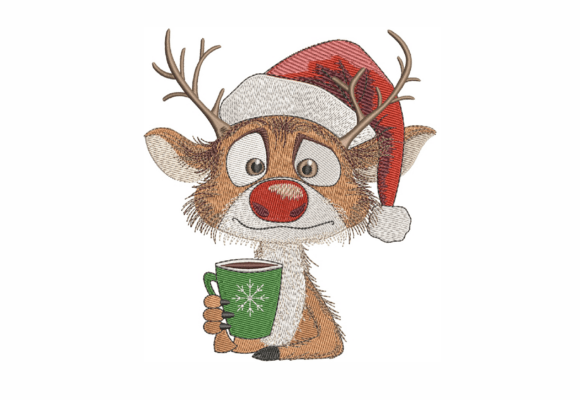
The immediate appeal of Funny Deer lies in its narrative quality. Unlike generic holiday clipart, this design captures a specific moment of anticipation that resonates emotionally with customers looking for personalized gifts or unique holiday embroidery. Visually, the composition suggests a balance between character personality and technical feasibility. For a designer, the "exquisite" description in the product details signals potential complexity, which requires careful scrutiny.
In my initial assessment, I am looking at the interplay between satin stitch outlines and fill stitch areas. A funny, expressive deer relies heavily on facial features and body posture. If the digitizer has prioritized aesthetics over physics, the eyes might be too small to stitch cleanly, or the antlers might lack the necessary underlay to prevent puckering on stretchy fabrics. The mood is undeniably festive, but as a professional, I need to confirm that the whimsy survives the mechanical process of stitching without requiring excessive post-production trimming or touch-ups.
Real-World Application: Stitching for Custom Tote Bags
To truly understand the value of this embroidery file, I mentally placed it into a current client project: a series of natural canvas tote bags intended as teacher appreciation gifts. Canvas is a forgiving but textured medium that demands a robust design. Funny Deer appears well-suited for this tote bag design application because the theme of "waiting for a gift" aligns perfectly with the function of a bag meant to carry presents or classroom supplies.
For this specific embroidery project, the design’s center of gravity matters. On a tote bag, the embroidery must sit correctly above the pocket or seam line without distorting when the bag is loaded. The playful nature of the deer allows for flexible placement; it does not require rigid symmetry like a traditional crest would. However, because canvas has significant fabric texture, I would advise using a heavier weight stabilizer than usual. If the design utilizes intricate running stitches for fur detail, those details risk getting lost in the weave of the canvas. In this scenario, I would test the design on a scrap piece of similar-weight canvas first to ensure the stitch density provides enough coverage without making the bag stiff or bulletproof.
Navigating Fabric Limitations and Hoop Constraints
While Funny Deer shines on stable home decor items like tablecloths and pillow covers, it requires more caution when applied to apparel. As someone who produces custom apparel regularly, I know that knit fabrics and fleece sweatshirts behave differently than woven cottons. If you are planning sweatshirt embroidery or baby items, you must verify the design's jump stitch sequence and underlay.
- Stretchy Fabrics: If the deer has tall, thin antlers or slender legs, these elements are prone to distortion on jersey knits. Always use a cut-away stabilizer and consider adding a water-soluble topping to prevent stitches from sinking into the pile.
- Small Hoop Sizes: Before purchasing, confirm the dimensions against your available hoops. Resizing a complex character design by more than 10-15% can alter stitch density and cause registration issues. If you only have a 4x4 hoop, ensure the detail level remains legible at that scale.
- Dark vs. Light Fabrics: Test the thread colors against your intended background. A light beige deer might disappear on cream linen but pop beautifully on navy velvet. Conversely, dark outlines on black fabric may need a white underlay base to maintain contrast and visual clarity.
- Curved Surfaces: Avoid placing this design directly over seams or on highly curved cap fronts unless it has been specifically digitized for caps. The flat perspective of a "waiting" pose usually translates poorly to cylindrical hooping.
Commercial Viability for Makers and Sellers
For Etsy sellers and small business owners, time is money. A design that requires constant troubleshooting eats into profit margins. Funny Deer seems positioned well for the handmade product market because it bridges the gap between traditional Christmas decor and modern, humorous gifting. This duality increases its shelf life; it is festive enough for December but charming enough to sell as general woodland nursery decor in January.
When creating printable mockups or listing photos, the distinct personality of this deer helps build buyer engagement. Customers connect with emotion, not just technique. However, professionalism dictates that you verify licensing before selling finished goods. Ensure your purchase includes commercial rights for physical products if that is your intent. Additionally, if you plan to offer this as part of a bundled digital embroidery file collection or use it in branding assets, double-check the terms regarding digital redistribution or modification.
Essential Pre-Stitch Checklist for Success
Before committing Funny Deer to a final finished product, run through this practical checklist to protect your materials and reputation:
- Verify File Compatibility: Confirm the format matches your machine brand. While most formats are universal, some machines interpret complex fills differently.
- Audit Stitch Count and Density: Open the file in your editing software. Check if the density is appropriate for your target fabric. High density on thin fabric causes holes; low density on towels looks sparse.
- Test on Scrap Material: Never skip this step. Use the exact fabric and stabilizer combination intended for the final piece. Inspect the back of the test stitch-out for excessive jumps or tension issues.
- Check Color Contrast: View the design in grayscale or black and white within your software. If the image lacks definition without color, the stitching will likely look muddy on textured fabrics.
- Review Stabilizer Strategy: Match the stabilizer to the fabric weight and design density. For this type of character design on home decor, a medium-weight tear-away often suffices, but apparel almost always demands cut-away.
- Inspect Small Details: Zoom in on the face and gift elements. Ensure there are no single-stitch dots that could pull through loose-weave fabrics.
Final Thoughts on Design Integrity
Funny Deer represents the kind of design assets that elevate a maker's portfolio beyond basic monograms. Its success in your studio depends entirely on respecting the relationship between the digital file and the physical substrate. Whether you are stitching a high-end tablecloth for a holiday showcase or a batch of baby embroidery onesies for a craft fair, treat this design with technical diligence. By validating the hoop size, testing thread colors, and understanding the limitations of your chosen fabric, you transform a cute digital concept into a tangible, high-quality product that builds customer trust and showcases your expertise as an embroidery professional.